

Part of a series:
Inside the Specialist Departments
Digital progress in variable data and labelling
A Conversation with Johan Nordenskjöld Theen, Team Manager, Retail Information Service
Welcome back to Inside the Specialist Departments, a series that spotlights the experts behind innovation, sustainability, and compliance at Nilörn.
When Johan Nordenskjöld Theen joined Nilörn nearly ten years ago, his background was in industrial production and computer science. Today, he works as a Team Manager within Retail Information Service (RIS), the team responsible for Nilörn’s variable print solutions.
From care labels and hangtags to QR codes and digital integrations, the department operates at the intersection of technology, compliance and customer collaboration – supporting brands in managing complex labelling requirements.
From production to structured solutions
Before entering the world of labelling and packaging, Johan worked in industrial assembly, gaining hands-on experience in production environments – from forklift driving to component assembly.
“It was a very practical environment,” he explains. “I’ve gained hands-on experience with standards like 5S and Lean approaches focused on improving productivity while making everyday tasks clearer and easier to perform. These principles haven’t just been valuable in operational work – they’ve also proven incredibly useful in systems development at Nilörn, helping create smarter, more efficient solutions.”
After several years in industry, he went on to study computer science at the University of Borås. Towards the end of his studies, he applied for a role at Nilörn and joined shortly after graduating. “It wasn’t really something I had planned,” he says. “But once I started, I realised that the mix of IT, customer collaboration and problem-solving suited me perfectly.”
Today, he leads a team focused on variable data – labels and printed items where information changes from order to order, reviewing incoming projects, defining requirements and ensuring each case is handled by the right expertise within the team.
“We set up the structure behind the labels,” he explains. “Care labels, stickers and hangtags — we make sure every piece of information has its place, even though the content changes from order to order.”
Working closely with brands, the team ensures that each solution is clearly defined from the outset.
“If we get the conditions right from the beginning, everything becomes both faster and more reliable.”
Technology, compliance and digital development
For Johan, the most rewarding aspects of his role are the people within the company, the continuous development of how the team works, and the possibility to deliver digital solutions that exceed customer expectations. “I’ve also got the privilege to work with a great group of people; we enjoy working together,” he says. “That makes it easy to collaborate, but also to keep improving what and how we perform our tasks.”
Technology plays a central role in this progress. System developments have significantly reduced artwork generation times – from 30–40 seconds per layout to just a few seconds – while also increasing consistency across deliveries.
“When we develop the way we work or improve our systems in a way that actually impacts productivity, quality or customer satisfaction – that’s very rewarding.”

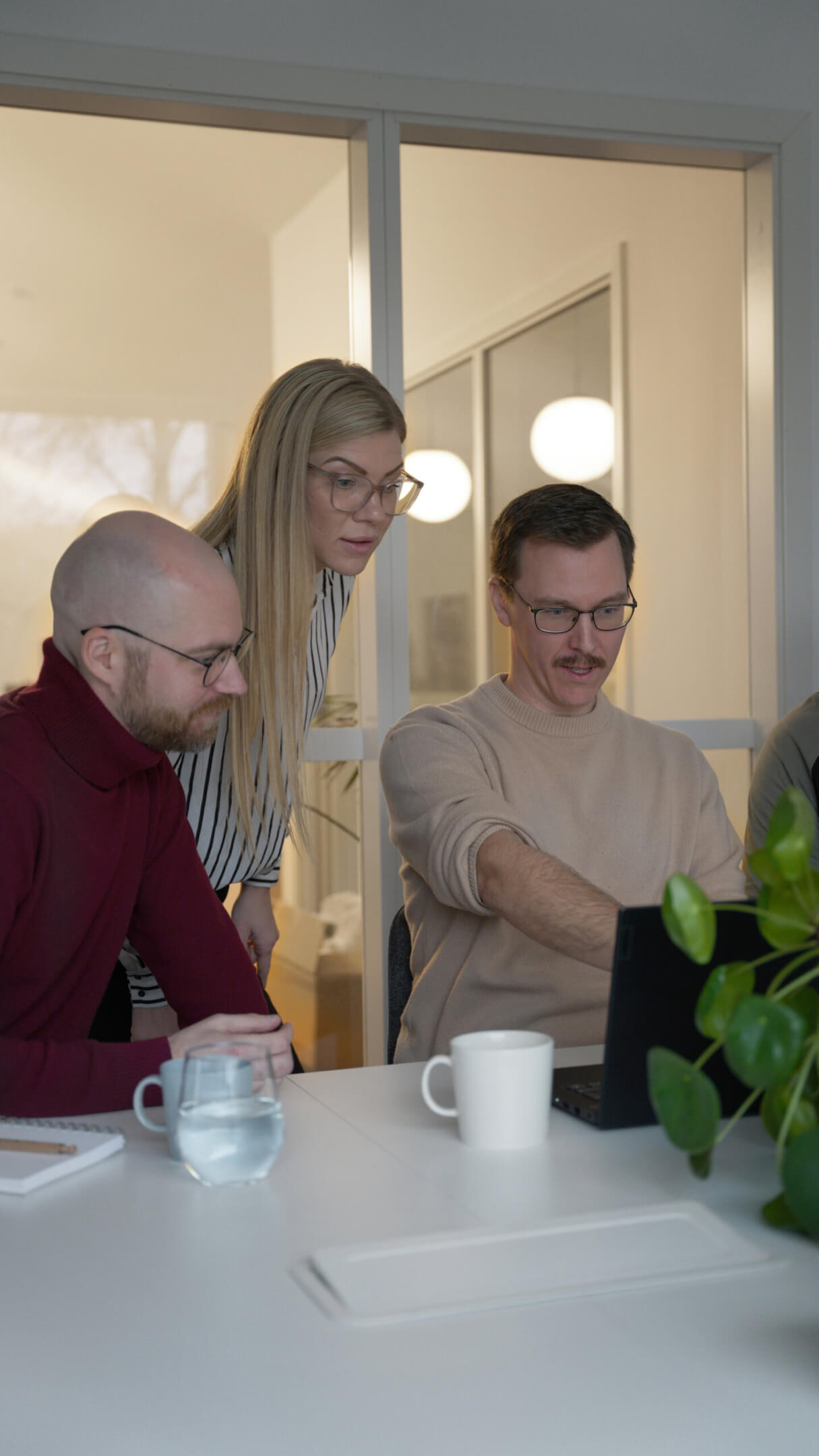

AI will increasingly support how we define compliant content on labels – it will also help us streamline daily work and become even more efficient.
Preparing for Digital Product Passports
Few developments are influencing the labelling landscape as clearly as the upcoming Digital Product Passport. “It’s already affecting us,” Johan says. “And once it’s fully defined, it will impact us even more.”
In close collaboration with Nilörn’s compliance function, the team translates regulatory requirements into practical solutions for brands.
“We work closely with compliance to understand new legislation, and then we bring that into discussions with the brands. We guide them, but they always make the final decisions.”
One example is a structured system of standardised care label solutions, covering more than 40, 60 and 80 countries respectively.
“The benefit is that you know you have the right information from the start,” he says. “And it also makes it easier to present a clear solution early on — both for us and for the brands.”
Connecting digital potential with future-ready solutions
Digitalisation is expanding the role of the label beyond the physical product.
“QR codes and Nilörn:CONNECT™ are really exciting,” Johan explains.“As long as the label is in the garment, you can change the digital experience over time.”
This means the digital experience can be updated even after the product is already in circulation – for example, redirecting from a brand website to a Digital Product Passport or a dedicated information page when requirements change. RFID is another area creating clear value.
“It brings big benefits in the supply chain,” he says. “You get better stock accuracy and you can handle products more efficiently since you don’t need line-of-sight scanning.”
As product information becomes more complex, the need for structured, scalable and compliant solutions continues to grow. “Our focus is to make that complexity manageable,” Johan says.
“By combining technology, knowledge and collaboration, we support brands moving forward in the complex world of labelling.”
As compliance, digitalisation and efficiency continue to converge, Retail Information Service plays an increasingly important role in supporting brands with scalable, future-ready solutions. In the next article in Inside the Specialist Departments, we meet Material and Innovation Specialist Christina Heines, who shares how material choices, recycling considerations and circular thinking are shaping the future of Nilörn’s labels, trims and packaging.